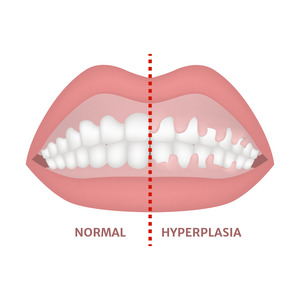
Does it seem like there’s too much gum tissue visible whenever you pull back your lips to smile? This could be the result of gum overgrowth, which is also sometimes referred to as gingival hyperplasia. Not only can overgrown gums make your teeth look unusually small, but they can also be a side effect of a larger issue, such as gum disease. Below is a brief look at what you need to know about gum overgrowth, including what causes it and how it can be addressed.
What Exactly is Gum Overgrowth?
Having gum overgrowth means that there’s an excessive amount of gum tissue in your mouth. Sometimes this results in a small bump or two appearing on your gums. In other cases, the excessive tissue can end up covering parts of your teeth, causing them to appear shorter and stubbier than they actually are.
What Causes Gum Overgrowth?
Sometimes gum overgrowth is simply a result of genetics. However, it can also be caused by the following:
- Inflammation: When you have gum disease, it can lead to inflammation of the gum tissue. In many cases, inflammation can result in gum enlargement.
- Certain Medications: There are some kinds of medication that might cause gum overgrowth as a side effect. Common examples include phenytoin for preventing seizures and cyclosporine for keeping the immune system under control.
- Systemic Conditions: If you are pregnant or suffer from a specific type of systemic disease (such as diabetes or anemia), you could end up experiencing gum overgrowth.
How Can Gum Overgrowth Be Treated?
There are a few different ways to address gum overgrowth. The solution that your dentist recommends will depend on the underlying cause of the issue. For example, if your gums have become overgrown due to gum disease, you may need to undergo scaling and root planing. This two-step treatment involves removing the harmful plaque and tartar that’s contributing to your gum disease, thereby reducing inflammation.
If your gum overgrowth is mainly a cosmetic problem, it may be possible to enhance the appearance of your smile with gum recontouring. This is when unneeded gum tissue is carefully removed to create a more balanced gumline and reveal more of the structure of your teeth.
Bear in mind that if your gum overgrowth is caused by a prescribed medication, you should never try to address it by changing the dosage on your own. Instead, talk to the physician who prescribed the medication in the first place to see what they recommend.
Remember, ignoring gum overgrowth could potentially increase your risk for cavities and other oral health issues, and it can have a negative impact on the appearance of your smile. It’s therefore generally in your best interest to have gum overgrowth treated by a professional as soon as you can.
About the Author
Dr. Rania Arif studied dentistry at the Western University of Health Sciences. She has completed training through Spear Education, Boston University, Phelan Dental Seminars, and other organizations. At Milton Hill Dental, she provides her patients with a comprehensive menu of services that includes scaling and root planing for gum disease as well as gum recontouring for gummy smiles. If you’re looking for a solution for gum overgrowth, you can schedule an appointment with Dr. Arif at her practice in Milton by visiting her website, using her online booking tool, or calling (617) 696-4800.